HOLOSCAN REFERENCE DESIGNS
From raw signals
to agentic devices
Turnkey hardware, firmware, and software solutions built with sensor and IC partners. Start with a working Holoscan system, then make it your own—with GPU algorithms, AI models, and agents that turn measurements into decisions.
Apache 2.0 Licensed Open SourceInspect the source. Modify the design. Build your product.
Choose your starting point
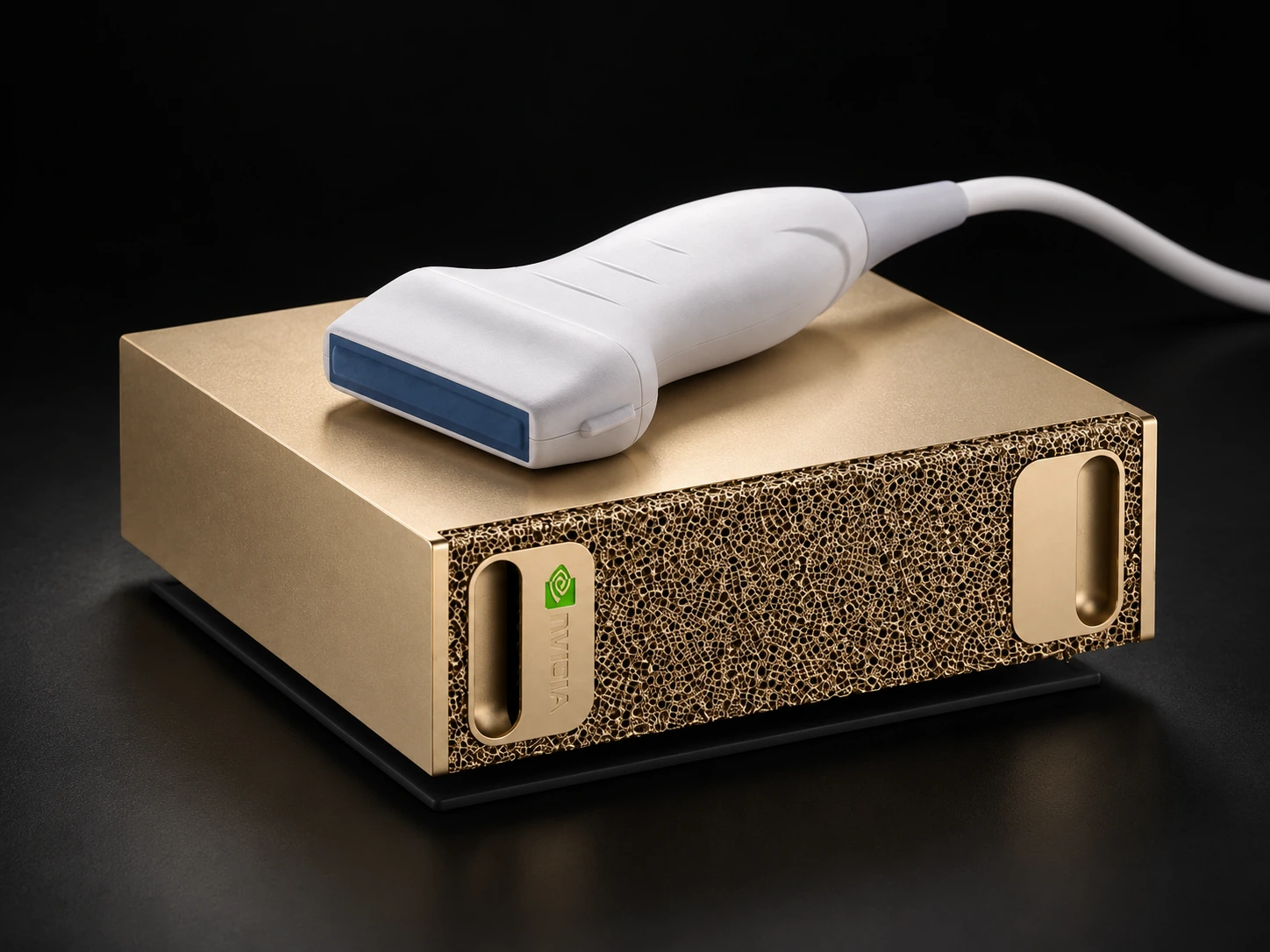
Software-defined ultrasound
Available now
Stream raw channel data from TI acquisition electronics over HSB-based Ethernet into GPU memory. Build your beamformer, train on captured RF data, and steer the next transmit from software.
Explore the ultrasound design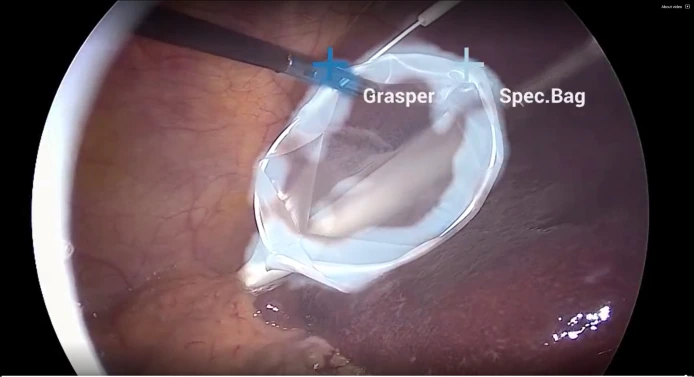
Software-defined endoscopy
Early access under NDA · General availability in 2027
An FPGA design, Holoscan operators, and a sample pipeline for real-time display. Yuan is demonstrating a PCIe-based FPGA capture card built on the design at GTC Berlin.
Explore the endoscopy designEndoscopy example image courtesy of CAMMA, IHU Strasbourg, and the University of Strasbourg
Minimal FPGA logic
Maximum software freedom
The FPGA provides the essential glue between sensors and GPUs: interfaces, capture, timing, and transport. Move the application’s signal processing, reconstruction, AI inference, and agent reasoning onto the GPU with CUDA and Holoscan.
Sensor + front end
Acquire raw measurements
Drive the next acquisitionFPGA I/O
Capture, timing, transport
Minimal sensor-to-GPU logicGPU + Holoscan
CUDA processing, AI, agents
Interpret and decide
Raw to insights
Give your algorithms access to the original measurements. Reconstruct an image, extract a signal, or run a model directly on raw data in the same GPU pipeline.
Change software, explore more
Replace a CUDA kernel, tune a model, or develop with coding agents. Test against recorded data, then bring the same algorithm into the live instrument.
Extend every layer
Start with the demonstration pipeline and its source. Adapt sensor integration, firmware, and operators to the device you want to build.
Let intelligence decide
what to sense next
An agentic device can act on what it learns. Holoscan’s low-latency execution and deterministic control capabilities let you connect perception to the next acquisition.
For active-steering sensors such as ultrasound and radar, use GPU results to update transmit settings, focus on a region of interest, or change the scan sequence. The sensor becomes part of the feedback loop.
Explore GPU-in-the-loop ultrasoundOne runtime for perception and control
Holoscan brings raw-data processing and control into one application graph. CUDA Graphs reduce dispatch overhead for eligible GPU stages. Pinned CPU cores control thread placement, while CUDA green contexts let you assign GPU resources on supported targets.
Explore the Holoscan runtimeOpen designs.
Open data.
Open models.
Reference designs connect our open data and open models initiative to real instruments. Collect the measurements that train new models, then bring those models back into the live acquisition loop.
Build datasets for your own research and products, or contribute captures to our open data initiatives. Choose what you share and help expand the data available to the community.
Collect raw data
Capture sensor measurements with acquisition settings and context. Keep the information you need to revisit reconstruction, test algorithms, and train new models.
Train and share models
Use your own datasets or openly available captures to develop and evaluate models. Contribute data and models to help others reproduce results and build on your work.
Bring insights back to the device
Deploy models in the Holoscan pipeline. Use their results to improve interpretation, guide acquisition, and collect the next set of measurements.
Your next product
starts further ahead
Get hardware, firmware, and software working together from the start. These partner-built reference designs give you a launchpad to accelerate the path from first prototype to market.
Spend your development time on the algorithms, agents, and capabilities that make your product different. Our reference designs are built for Apache 2.0 licensed reuse. Ultrasound is available now; endoscopy is in NDA early access ahead of general availability in 2027.